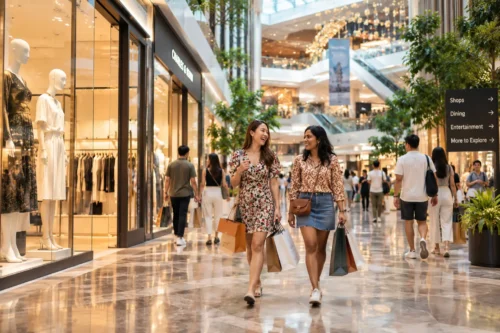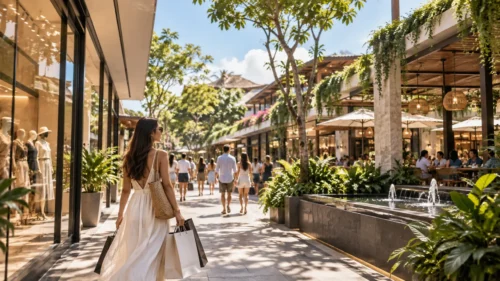
Bali is widely known for its beaches, temples, restaurants, and cultural attractions, but tourism on the island also influences another important part of the visitor experience: retail. Shopping is no longer simply an activity that happens between sightseeing stops. For many visitors, discovering products, stores, markets, boutiques, and lifestyle destinations has become part of how they experience Bali.
This relationship between tourism and retail is often described as retail tourism. It looks at how visitors interact with commercial environments while traveling and how businesses adapt their products, locations, services, and experiences to meet tourist expectations.
In Bali, the connection is particularly interesting because the island combines a strong tourism economy with a diverse retail environment. Traditional commerce, independent businesses, boutiques, artisan producers, and contemporary retail destinations all contribute to the experience.
What Is Retail Tourism?
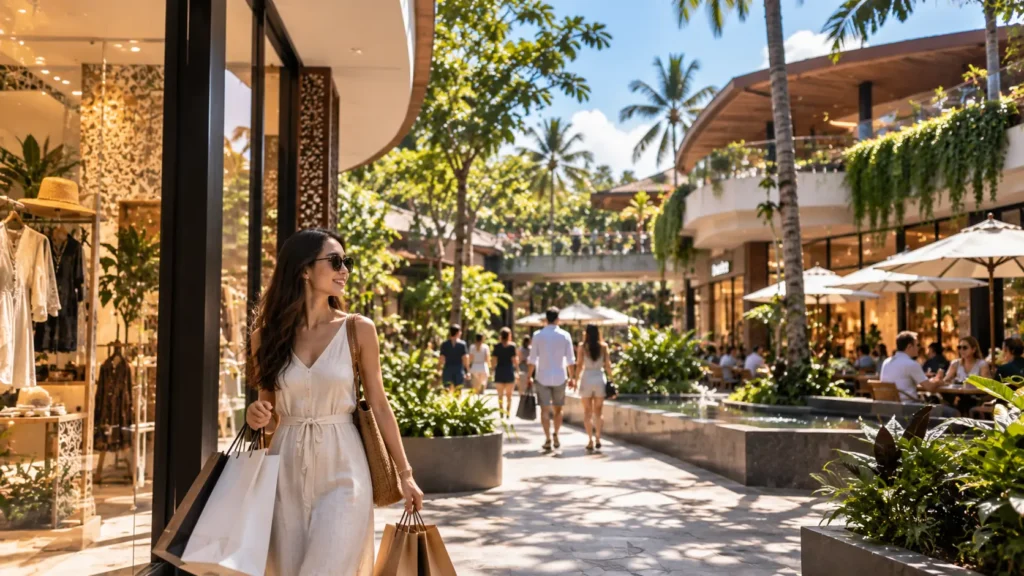
Retail tourism refers to the relationship between travel and shopping-related activities. It does not necessarily mean that travelers visit a destination solely to shop. Instead, shopping can become one component of a wider travel experience.
A visitor may spend the morning exploring an attraction, stop for lunch, browse a few stores in the afternoon, and finish the day with dinner. In this situation, retail becomes part of the overall itinerary rather than an isolated activity.
The concept also includes the way destinations develop retail environments specifically suited to visitors. Accessibility, product selection, atmosphere, dining, entertainment, and convenience can all influence whether tourists decide to spend time in a particular commercial area.
This makes retail tourism broader than simply asking where people shop. It also considers why they shop, when they shop, and what they expect from the experience.
Why Shopping Has Become Part of the Bali Travel Experience
Tourists often have different priorities from local shoppers. A resident may visit a store because they need a particular product, while a visitor may be looking for something connected to their trip.
Souvenirs, fashion, gifts, lifestyle products, food, beauty products, and locally inspired goods can all become part of a traveler’s experience. Shopping can also provide an opportunity to take something tangible home from a destination.
This creates an important connection between tourism and retail. Businesses are not only serving people who live in Bali but also visitors who may have different expectations, schedules, budgets, and reasons for making a purchase.
The experience surrounding the purchase can therefore become just as important as the product itself. A pleasant environment, convenient location, interesting architecture, dining options, and opportunities to spend time with companions can make retail destinations more appealing to tourists.
This relationship is also reflected in the growth of shopping tourism bali, where shopping becomes a more intentional part of the overall travel experience.
How Tourism Influences Bali’s Retail Environment
Tourism has a direct influence on what businesses offer and how they present themselves.
Retailers operating in areas with significant visitor traffic may need to consider international customers, seasonal demand, different payment preferences, multilingual communication, and expectations around service.
Product presentation can also become more experience-oriented. Stores may place greater emphasis on visual merchandising, atmosphere, packaging, and storytelling because visitors are often discovering a product for the first time.
Location matters as well. Retail businesses that are easy to reach from hotels, attractions, dining areas, and major tourism corridors can benefit from being incorporated into existing travel routes.
This creates a feedback loop. Tourist activity encourages retail development, while attractive retail environments can give visitors additional reasons to explore particular areas.
For a broader look at this relationship, the development of the bali retail industry can be understood through the way tourism demand influences commercial spaces, business models, and consumer expectations across the island.
Different Retail Formats Serve Different Travelers
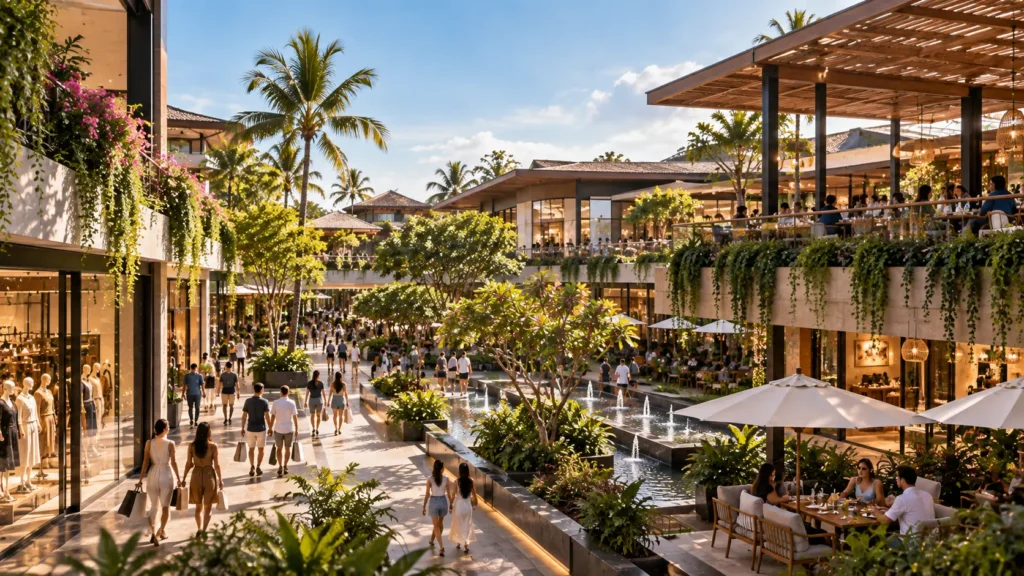
Bali does not have one universal retail environment.
Traditional markets can appeal to visitors interested in local products and everyday commerce. Independent shops may attract travelers searching for distinctive products. Boutiques can appeal to visitors interested in fashion and design, while contemporary retail destinations can combine shopping with dining and leisure.
These formats can coexist because they fulfill different needs.
A traveler looking for a culturally oriented experience may prefer a market or independent store. Another visitor may prioritize convenience and want several shopping, dining, and leisure options within the same destination.
This variety is particularly useful for a tourism destination because travelers rarely have identical preferences.
Families may prioritize accessibility and comfortable spaces. Younger travelers may look for fashion, cafés, and social environments. International visitors may value convenience and a broad selection of products.
Retail tourism therefore works best when a destination can accommodate different types of visitors rather than relying on one shopping format.
Convenience Is Changing How Tourists Shop
Travelers have limited time. Even visitors staying in Bali for several days may have tightly planned itineraries that include beaches, cultural attractions, restaurants, wellness experiences, and other activities.
As a result, convenience can play an important role in shopping decisions.
A retail destination that combines multiple activities can be easier to include in an itinerary than several separate shopping stops. Visitors may be able to shop, eat, relax, and meet friends without having to make multiple journeys.
Other factors can also influence convenience, including parking, accessibility, weather protection, seating, payment options, operating hours, and the availability of food and beverages.
This does not mean that tourists always choose the most convenient option. Some travelers deliberately seek more spontaneous or local experiences. However, convenience becomes increasingly relevant when shopping needs to fit around other travel activities.
Shopping and the Bali Travel Itinerary
The timing of shopping can vary significantly between travelers.
Some visitors prefer to shop during the afternoon after outdoor activities. Others may reserve shopping for the final day of a trip when they have a better understanding of what they want to take home.
Shopping can also work as a flexible activity when weather changes affect outdoor plans.
Thinking about a shopping itinerary bali strategy can therefore help travelers organize shopping around the rest of their trip rather than treating it as a completely separate activity.
For example, a visitor could combine shopping with lunch, stop at a retail destination after sightseeing, or leave souvenir shopping until the end of the trip.
The advantage is flexibility. Shopping does not always have to occupy an entire day.
Shopping Is Becoming More Than a Transaction
One of the biggest changes in modern retail is the growing importance of experience.
Visitors increasingly encounter retail environments where shopping is combined with cafés, restaurants, entertainment, events, public spaces, and architectural experiences.
For tourism destinations, this creates an opportunity to make retail more engaging. A visitor may initially arrive because they want to browse stores but remain longer because there are other activities available.
This changes the role of a retail destination. Instead of simply being a place where products are exchanged for money, it can become part of a visitor’s leisure experience.
The distinction is particularly relevant in Bali, where tourism is strongly connected to lifestyle, hospitality, food, design, and social experiences.
What Makes a Retail Destination Attractive to Tourists?
Tourists can evaluate retail destinations differently from local consumers.
Product variety is obviously important, but it is only one factor. The surrounding environment can influence the decision just as strongly.
Visitors may consider:
- How easy the destination is to reach
- Whether there are different types of stores
- The availability of dining options
- The comfort of the environment
- Whether there are places to rest
- The overall atmosphere
- Whether the destination is suitable for families or groups
- How easily shopping can be combined with other activities
These factors help explain why a tourist shopping destination can become attractive even when shopping is not the visitor’s only reason for coming.
The destination itself becomes part of the experience.
Explore More: What Makes a Retail Destination Attractive to Tourists
The Growth of Tourist-Focused Retail in Bali
As tourism evolves, retail businesses also have opportunities to respond to new visitor expectations.
The rise of digital discovery means tourists can research products, stores, restaurants, and retail destinations before arriving. Social media can also influence where visitors decide to spend their time.
At the same time, tourists increasingly discover destinations through experiences shared by other travelers rather than traditional advertising alone.
This creates new opportunities for businesses that can offer something memorable.
The concept of tourist retail bali is therefore not limited to souvenir shops. It can include fashion, lifestyle products, food-related retail, design, beauty, wellness, and other commercial experiences that become relevant to visitors.
Retail businesses can benefit by understanding not only what tourists purchase but also what motivates them to visit.
Explore More: The Growth of Tourist Focused Retail in Bali
Retail Destinations as Part of Destination Development
Retail can also contribute to the development of tourism areas.
A well-designed commercial destination can encourage visitors to spend more time in an area rather than simply passing through it. Dining, entertainment, events, and public spaces can increase the number of reasons for people to stay.
This is especially relevant when retail is integrated with other tourism-related activities.
Rather than thinking about shopping as an isolated economic activity, destination planners and businesses can consider how retail interacts with hospitality, food and beverage, entertainment, transportation, and public spaces.
When these elements work together, the result can be a more complete visitor experience.
For travelers who want to explore different retail options as part of their trip, discovering the best shopping in bali can become another way to incorporate retail into a broader Bali itinerary.
How Travelers Can Approach Shopping in Bali
Travelers do not need to dedicate an entire trip to shopping to benefit from Bali’s retail diversity.
A more practical approach is to identify shopping opportunities that naturally fit into an existing itinerary.
Someone staying near a particular area might explore nearby retail destinations after sightseeing. Families can look for places where shopping can be combined with dining and comfortable breaks. Visitors looking for gifts can schedule purchases toward the end of their trip.
The key is matching the shopping experience with the purpose of the journey.
Those looking for a highly local experience may prioritize independent businesses and traditional commerce, while visitors who value convenience may prefer destinations where multiple activities are available in one location.
The Future of Retail Tourism in Bali
Retail tourism in Bali is likely to continue evolving alongside the island’s tourism industry.
Visitors will continue to look for products, but their expectations around how and where they shop can change. Convenience, experience, digital discovery, lifestyle, dining, and entertainment can all influence retail decisions.
For businesses, this means understanding the tourist journey is becoming increasingly important.
The most successful retail environments may not necessarily be those with the largest number of stores. Instead, they can be destinations that understand why visitors come, what they need during a trip, and how shopping can complement other experiences.
Bali’s advantage is its diversity. Traditional commerce, independent businesses, contemporary retail, hospitality, and lifestyle destinations can all exist within the same tourism ecosystem.
Frequently Asked Questions
What is retail tourism?
Retail tourism describes the relationship between tourism and shopping-related activities. It includes not only purchases but also how retail environments become part of a visitor’s travel experience.
Why is shopping important for tourism in Bali?
Shopping gives visitors opportunities to purchase souvenirs, gifts, fashion, lifestyle products, and other goods while adding another activity to their travel itinerary.
How does tourism influence retail businesses?
Tourism can influence product selection, store presentation, location, services, operating patterns, and the overall experience businesses provide to visitors.
What should tourists consider when choosing where to shop?
Visitors can consider accessibility, product variety, atmosphere, comfort, dining options, operating hours, and how easily the destination fits into their itinerary.
Is shopping in Bali only about souvenirs?
No. Bali’s tourist-oriented retail environment includes many categories beyond souvenirs, including fashion, lifestyle products, food, beauty, design, and other contemporary retail offerings.
Final Thoughts
Retail tourism shows how shopping can become an integrated part of the Bali travel experience. Visitors may begin with a simple intention to purchase something but discover that the surrounding environment, dining, leisure, convenience, and atmosphere are equally important.
For businesses, this creates an opportunity to think beyond transactions and consider the complete visitor journey. For travelers, it means there are many ways to incorporate shopping into a Bali itinerary without making it the sole purpose of the trip.
As Bali continues to develop as an international tourism destination, the relationship between travel and retail will likely become even more connected. Traditional businesses and modern retail destinations can serve different audiences while contributing to the same broader tourism ecosystem.
The result is a retail landscape where shopping is not simply something visitors do in Bali. It can become part of how they experience, explore, and remember the destination.