If you are planning a Banda Sea liveaboard, it is worth looking beyond the better-known routes and considering how Sulawesi fits into Indonesia’s extraordinary underwater ecosystem. From tiny pygmy seahorses and blue-ringed octopuses to bizarre rhinopias and colorful nudibranchs, diving in Sulawesi offers an exceptional mix of macro subjects, coral reefs, walls, and unusual marine life.
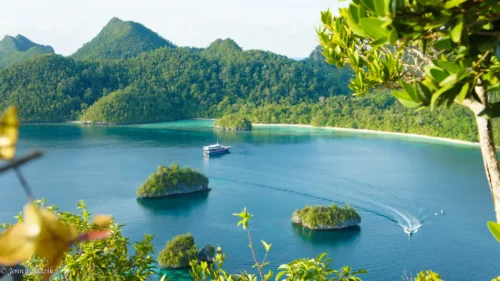
Located within the Coral Triangle, Sulawesi is surrounded by some of the most biologically diverse tropical seas on Earth. The variety is not limited to colorful reef fish. Divers can encounter rare critters in sandy muck environments, photograph delicate creatures hiding among corals, and explore healthy reef systems where larger marine animals also appear.
For underwater photographers and experienced divers, that combination makes diving in Indonesia particularly rewarding.
Why Is Sulawesi So Rich in Marine Life?
Sulawesi sits within the Coral Triangle, a region recognized for exceptional marine biodiversity. Its underwater landscapes range from black-sand muck sites and coral gardens to steep walls, seamounts, and open-water habitats.
Bunaken National Park alone is home to around 390 coral species, together with numerous fish, mollusks, reptiles, and marine mammals.
Further south and east, the Togean Islands contain four major reef formations: fringing reefs, barrier reefs, patch reefs, and atolls, and around 307 marine species have been recorded there.
That habitat diversity is one reason Sulawesi can feel completely different from one dive site to another.
One dive may be focused on tiny macro creatures hiding in volcanic sand. The next can reveal a colorful coral wall filled with reef fish.
1. Blue-Ringed Octopuses
Few underwater encounters are as memorable as finding a blue-ringed octopus.
These tiny cephalopods are famous for the electric blue rings that become particularly visible when the animal feels threatened. Their small size and ability to blend into their surroundings make them challenging yet rewarding subjects for underwater photographers.
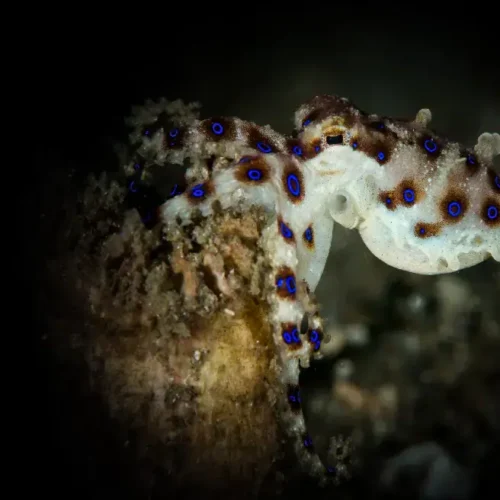
In areas such as Lembeh, divers often use slow, observant diving techniques to search sandy habitats for unusual creatures.
The important lesson is simple: don’t rush.
A blue-ringed octopus may be only a few centimeters away while remaining almost invisible against its surroundings.
2. Orang Utan Crab
The orang-utan crab is another example of Sulawesi’s remarkable macro biodiversity.
Covered in long, hair-like structures, this unusual crab can resemble a tiny underwater ball of fur. It is often associated with anemone or soft-coral environments, where its appearance provides excellent camouflage.
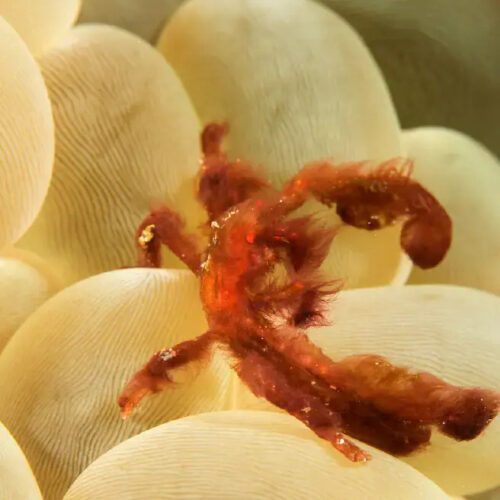
For photographers, this is a creature that rewards patience. Finding the animal is only the beginning. Getting the right composition, focusing on its eyes, and avoiding disturbance can turn a brief encounter into an exceptional photograph.
This rare macro encounter is one reason luxury liveaboard diving can appeal to photographers who want more time in remote dive areas.
3. Pygmy Seahorses
Pygmy seahorses are among the smallest and most difficult marine animals to spot.
They are closely associated with specific gorgonian sea fans. Research has documented species such as Hippocampus bargibanti and Hippocampus denise living in association with particular host sea fans.
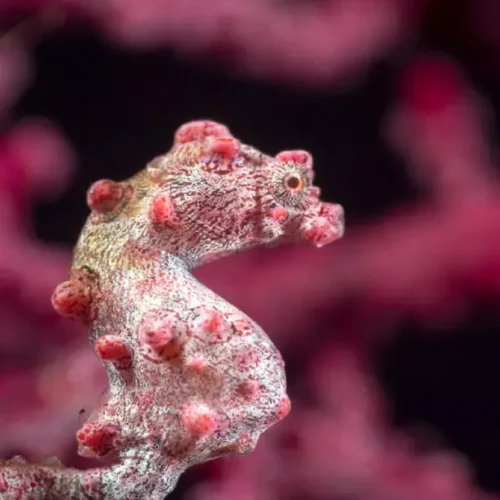
The challenge is obvious: the animal’s camouflage can make it almost indistinguishable from its host.
A good dive guide can therefore make a significant difference.
For underwater photographers, a pygmy seahorse encounter is less about covering distance and more about slowing down, observing carefully, and maintaining excellent buoyancy.
4. Rhinopias
Rhinopias are among the most bizarre-looking fish divers can encounter in Sulawesi.
Their unusual body shapes, elaborate appendages, and camouflage make them particularly popular with macro photographers. Rather than searching for fast-moving animals, divers may spend several minutes examining a small section of reef or sand.
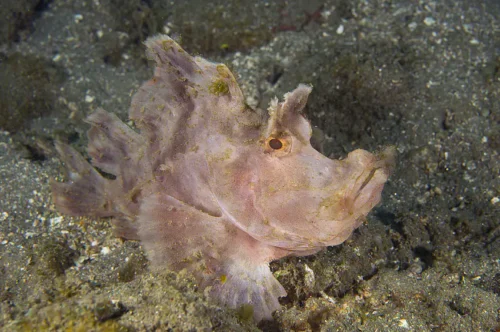
The challenge is not simply finding a rhinopias. It is recognizing one.
Their ability to blend into their surroundings demonstrates how much marine life can be hiding in plain sight.
Sulawesi’s combination of muck environments and coral habitats creates ideal conditions for this kind of close-up exploration. Wallacea Dive Cruise also highlights the region’s rich macro life, including seahorses and frogfish, particularly around Pulau Dua and Northwest Sulawesi.
5. Nudibranchs
Nudibranchs may be among the most visually spectacular creatures in Sulawesi.
These small sea slugs come in an enormous range of colors, patterns, and shapes. Their slow movements make them excellent subjects for photography, but their small size means divers need to pay close attention.
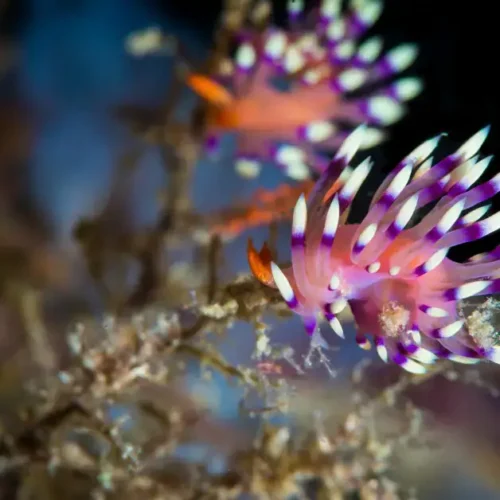
Lembeh is particularly well known for rare critters and macro diving, while other regions of Sulawesi offer coral-rich environments and different underwater experiences.
For photographers, nudibranch hunting can become an enjoyable challenge: identify the habitat, slow down, search carefully, and look for movement or unusual colors.
More Than Macro: Sulawesi’s Bigger Picture
Although Sulawesi is famous for its tiny marine creatures, diving there is not exclusively about macro life.
Bunaken provides a contrasting experience with dramatic walls and extensive coral ecosystems. Southeast Sulawesi’s Wakatobi region is also recognized for exceptional fish diversity, with PADI reporting more than 900 fish species.
This range is what makes the region so compelling.
A diving cruise can combine different underwater environments rather than limiting a trip to a single reef or resort. Depending on the route, divers may experience muck sites, coral gardens, walls, seamounts, and areas where pelagic species pass through.
Why Choose a Liveaboard for Sulawesi?
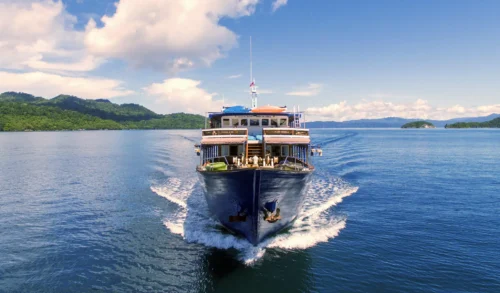
For divers who want to maximize their time underwater, a liveaboard can provide access to areas that are difficult to reach from a single land-based resort.
A Banda Sea liveaboard can also complement a broader diving itinerary in Indonesia, particularly for travelers interested in exploring remote marine environments rather than staying in one location.
For those seeking a more private experience, options such as a Sulawesi private charter or a private boat tour in Sulawesi can provide greater flexibility in dive schedules and destinations.
The appeal is not simply luxury. It is access, time, and the opportunity to explore multiple underwater environments in a single expedition.
Sulawesi Marine Life: What Should You Look For?
| Marine Life | Best Experience | Why Photographers Love It |
|---|---|---|
| Blue-ringed octopus | Macro/muck diving | Striking colors and behavior |
| Orang-utan crab | Macro diving | Unusual appearance |
| Pygmy seahorse | Reef/sea fan diving | Tiny and highly camouflaged |
| Rhinopias | Muck/reef diving | Exceptional camouflage |
| Nudibranchs | Macro diving | Huge variety of colors and forms |
Sulawesi demonstrates why Indonesia remains such an important destination for divers. Its underwater biodiversity is not defined by a single iconic animal or reef system. Instead, it is the combination of habitats and species that creates the experience.
For travelers considering a Banda Sea liveaboard, adding Sulawesi to the diving conversation opens another side of Indonesia’s underwater world. From black-sand critter hunting to coral-covered walls, the region offers something for divers who enjoy looking closely as well as those who prefer expansive reef scenery.
And that is perhaps the greatest attraction of Sulawesi: you never quite know what you will find on the next dive.
For divers looking beyond conventional routes, Wallacea Dive Cruise offers an opportunity to explore Sulawesi and other remote Indonesian waters on a liveaboard, combining exploration with comfortable access to some of the region’s most interesting underwater environments.
If your idea of the perfect dive involves discovering something you have never seen before, Sulawesi deserves a place on your Indonesia diving itinerary.